For years, talking to an AI meant a one-way exchange.
You asked a question, the model answered, and then you did the work yourself, copying information between tabs and clicking every button yourself.
An OpenClaw AI agent closes that gap between knowing and doing.
This guide breaks down what an OpenClaw AI agent is, how it operates behind the scenes, and what it can genuinely handle for you.
We will also answer the most common questions, including whether it is free and safe to run.
By the end, you should be able to explain the difference between a chatbot and an agent to anyone who asks, and decide for yourself whether this shift from talking to doing belongs in your own workflow.
What Does an AI Agent Do, Exactly?
A standard chatbot receives a prompt and returns a response. That is the entire interaction.
An AI agent operates differently because it operates within an agentic loop.
A task comes in, the agent gathers context such as conversation history and available tools, and sends that bundle to a language model for reasoning.
The model decides whether it needs a tool to complete the request, uses it if so, observes the result, and repeats the cycle until the task is done.
This pattern of reasoning, acting, and observing is often called the ReAct pattern, and it underlies nearly every AI agent on the market.
Picture of you asking your favourite chatbot to schedule a meeting. It can tell you exactly how to do it, step by step, but it will not open your calendar and book the slot itself.
An agent closes that final gap. It accesses your calendar, checks availability, and confirms the meeting without you having to touch another app.
What Is an OpenClaw AI Agent?
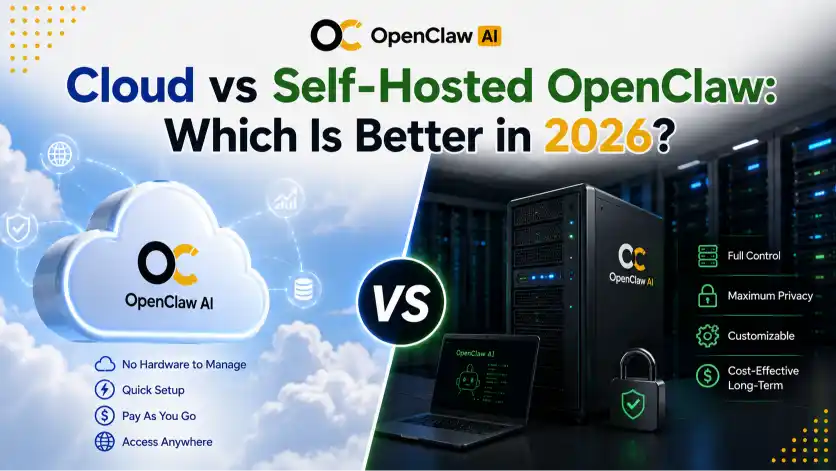
An OpenClaw AI agent is an open-source assistant that runs on hardware you control, whether that is a laptop, a Raspberry Pi, or a VPS.
It connects to messaging apps such as WhatsApp, Telegram, Discord, and Slack, so you talk to it the same way you talk to a person.
The project launched in late 2025 and gained over 100,000 GitHub stars within its first eight weeks, a growth curve that outpaced almost every open-source tool before it.
It went through two quick name changes, from Clawdbot to Moltbot to OpenClaw, but the underlying software stayed the same throughout.
What separates it from a cloud assistant is where it lives.
Everything runs on hardware you choose and control, whether that is a Mac Mini sitting on a desk, a spare Linux box, or a rented server.
That self-hosted approach means your data, memory, and conversation history stay on infrastructure you own rather than a vendor’s servers.
How Does an OpenClaw AI Agent Work?
OpenClaw follows a hub-and-spoke model, built around a central component called the gateway.
The gateway is always on, and it handles message routing, session management, and tool access for every conversation.
Messages arrive through adapters that convert Slack, Discord, iMessage, or other channels into a single standard format that the gateway understands.
From there, the agent assembles context, including long-term memory and instructions stored in Markdown files, before sending it all to the language model.
Skills are what make an OpenClaw AI agent flexible.
Each skill is a folder containing instructions for one specific task, such as updating a Trello board or managing a Google Calendar event.
The agent only loads the metadata for each skill upfront and pulls the full instructions on demand, preventing the model from being overwhelmed by information it does not need yet.
Thousands of community-built skills already exist, covering everything from Docker container management for engineers to CRM updates for sales teams.
You can also trigger any of them on a schedule through cron jobs, so the agent checks in and reports back without you sending a message first.
What Can an OpenClaw AI Agent Do For You?
In practice, an OpenClaw AI agent can triage your inbox, draft replies, and manage your calendar without you opening a single extra app.
Developers connect it to GitHub and CI/CD pipelines so that it can flag a failed build, explain the likely cause, and offer to roll back the deployment, all through a chat message.
Businesses use it for lead research, website audits, and CRM updates.
One widely shared example involved an agent negotiating a car purchase over email while its owner was away, saving thousands of dollars through back-and-forth messages the owner never had to send himself.
You can also chain skills together into a single instruction, such as pulling urgent GitHub issues every Monday morning, summarising them, and posting the summary straight to a Slack channel.
Even outside of technical use cases, plenty of people run an OpenClaw AI agent for simple personal organisation:
- Sorting reminders
- Tracking a family calendar
- Keeping a running log of household tasks.
The appeal is the same either way. You describe what you want in plain language, and the agent figures out which skill handles it.
Is OpenClaw Free?
Yes, the OpenClaw software itself is free and open source.
Your only ongoing costs come from the AI model powering it and, if you choose to run it on a server instead of your own computer, a small monthly hosting fee.
Light daily use through a model such as Claude or GPT tends to fall in the $10–$30/month range.
A VPS adds another $5 to $10 on top of that, which is a fair trade for keeping the agent off your main device.
Is OpenClaw Safe?
It can be, but safety here depends entirely on how carefully you configure it.
Because an OpenClaw AI agent can read files, run terminal commands, and access your accounts, a misconfigured setup can turn into a serious security gap.
Thousands of exposed instances already exist online simply because someone skipped basic hardening steps.
Prompt injection is the other risk you should know about.
This happens when malicious instructions are tucked inside content the agent reads, such as an email, and the model follows those instructions, thinking they came from you.
Running the agent in an isolated environment, reviewing any third-party skill before installing it, and keeping credentials encrypted go a long way toward closing these gaps.
Most security guides recommend the same starting checklist:
- Run the agent as a non-root user
- Isolate it inside a Docker container
- Use a firewall to limit exposed ports
- Store API keys in a dedicated secrets manager rather than a plain configuration file.
None of this is complicated, but skipping it is exactly how misconfigured instances end up exposed on the open internet.
Is ChatGPT an AI Agent? And Who Are the Big Four?
Not by default.
ChatGPT is primarily a conversational model, and while it can use plugins or browsing tools in limited ways, it does not run the same continuous agentic loop that OpenClaw does out of the box.
The distinction comes down to autonomy: an agent takes action on a schedule or in response to events, while a standard chatbot waits for you to ask.
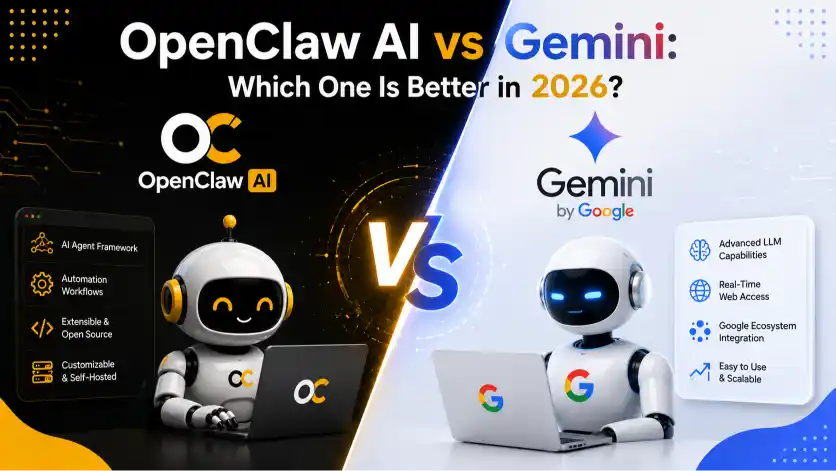
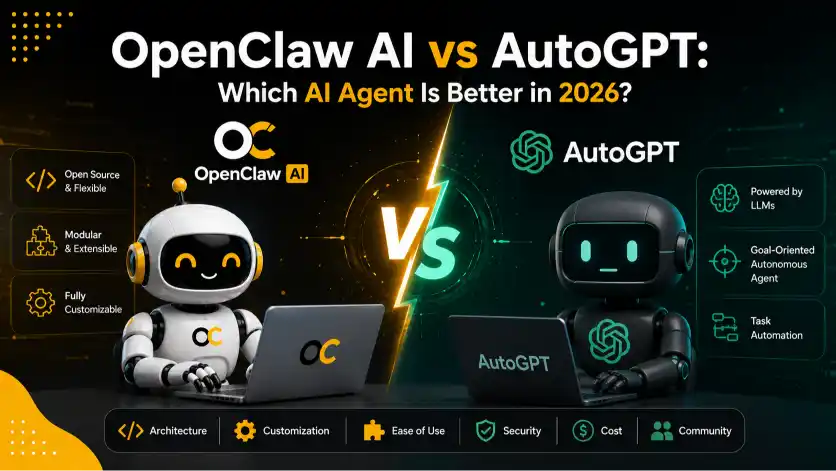
When people search for the biggest names in this space, OpenClaw usually sits alongside Anthropic’s Claude Cowork, Google’s agent offerings, and Microsoft’s own agent frameworks as the most discussed options in 2026.
Each takes a different approach to the same problem, and OpenClaw’s open-source, self-hosted design is what sets it apart from the rest of that group.
The practical difference between these options comes down to control versus convenience.
OpenClaw hands you the keys to your own infrastructure and asks you to manage your own security.
At the same time, the other three tend to run in a more contained, vendor-managed environment with guardrails already in place.
Final Thoughts
An OpenClaw AI agent represents a genuine shift from asking AI for advice to letting it carry out the task itself.
The gateway, adapters, and skills system work together to turn a simple chat message into a completed action, whether that is clearing your inbox or deploying a fix to production.
The idea can feel intimidating the first time you read about gateways, adapters, and skills, but the underlying loop is simpler than it sounds once you see it in action.
Start with one task, watch the agent reason through it, and the rest of the system starts to make sense on its own.
If you plan to run one yourself, the infrastructure underneath it deserves as much thought as the agent’s configuration.
A dependable, affordable VPS keeps your agent online and isolated from your personal files, and it is worth comparing hosting plans before you commit to one.