You typed OpenClaw vs Gemini into a search bar, but there is a decent chance you are asking one of two different questions without realizing it.
Most comparison pages online only answer one of them.
The first question is a product comparison: should you use Google’s Gemini app as your everyday assistant, or set up OpenClaw as a self-hosted agent instead?
The second is more technical: should Gemini be the model powering your OpenClaw agent, or is something else a better fit?
This guide answers both, so stick with whichever section actually matches what brought you here.
Quick Comparison at a Glance
Here is the short version. Use it to see where each tool naturally fits, then read on for the full reasoning behind each point.
- Best for zero-setup convenience: Gemini App
- Best for always-on, unattended automation: OpenClaw
- Best for messaging-app integration: OpenClaw
- Best for native Google Workspace integration: Gemini App
- Best for model flexibility: OpenClaw
- Best for the largest raw context window: Gemini App
- Best for predictable subscription pricing: Gemini App
- Best for open-source, self-hosted control: OpenClaw
Keep that snapshot in mind as you read on. It sets up the logic behind every difference below.
Key Differences Between OpenClaw and Gemini
1) Core Philosophy
Gemini is Google’s assistant app, built to live inside Search, Docs, Gmail, and your browser. It prioritizes deep integration with one ecosystem over flexibility outside it.
OpenClaw is a self-hosted, open-source agent framework.
It asks what you actually need done, then reaches you wherever you already work instead of confining you to one company’s apps.
2) Where Each One Lives
Gemini lives in a browser tab and Google’s own apps. Close the tab, and nothing runs until you open it again.
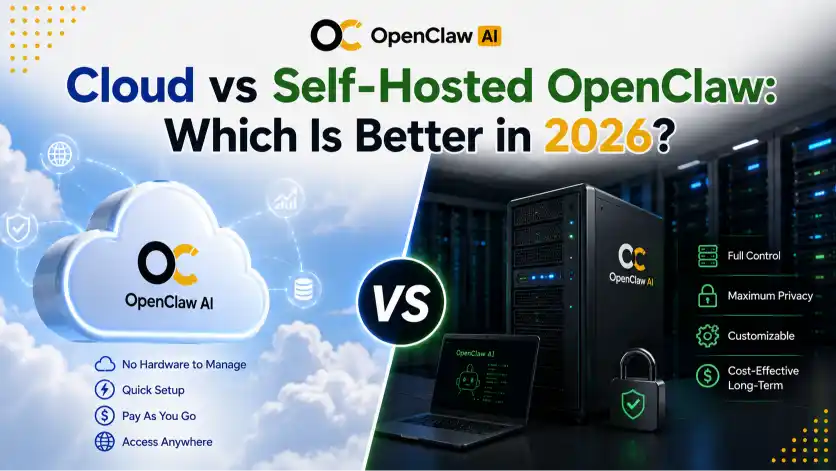
OpenClaw reaches you through Telegram, WhatsApp, Discord, or Signal instead of requiring a browser at all. That single difference shapes almost everything else on this list.
3) Running 24/7 vs Session-Based
Gemini only works while you are actively using it. There is no background mode, no cron jobs, and no scheduled task that runs while you sleep.
OpenClaw runs around the clock on hardware you control. Scheduled tasks and monitoring keep working whether or not you are at your desk.
4) Google Workspace Integration
If you live inside Gmail, Docs, and Calendar, Gemini’s native integration is genuinely hard to replicate elsewhere. It was built for that ecosystem first.
OpenClaw reaches Google Workspace, too, but through connected skills rather than a native, built-in connection.
Step outside Google entirely, into Outlook, Notion, or an internal company tool, and OpenClaw adapts far more easily than Gemini does.
5) Model Choice and Flexibility
Gemini only runs on Gemini. That is the whole point of the app, and it is also its biggest limitation if a different model would suit your task better.
OpenClaw runs on any model you choose, including Gemini itself.
That means you are never locked into one company’s roadmap or pricing changes, and you can swap models the moment a better or cheaper option appears.
6) Context Window and Capability
Gemini earns its reputation honestly here.
Its context window handles entire codebases or hours of video in one pass. And, its Google Search grounding is genuinely the best of any assistant for current information.
Its 2026 Agent Mode can now break a task into steps and work through them without you babysitting every prompt.
As a result, this narrows the practical gap with OpenClaw for some single-session tasks.
7) Persistent Memory Across Sessions
Gemini’s memory across sessions is limited. Long-running context tends to reset more than people expect once a session ends.
OpenClaw is built to track ongoing context across sessions by design, which matters more the longer an agent has been running a recurring task for you.
8) Setup and Technical Requirements
Gemini asks nothing of you upfront. Sign in, open the app, and start typing.
OpenClaw asks more of you before your first task runs.
That upfront setup buys you the always-on, cross-platform behavior that Gemini cannot offer in exchange.
9) Cost and Pricing
Gemini offers a free tier, or 20 dollars a month for Advanced. The pricing is simple and predictable because it is a single subscription.
OpenClaw itself is free and open source, plus whatever you spend on model API usage.
One honest note here: some hosted versions online charge a flat monthly fee, often around 49 dollars, for a managed cloud instance.
That is a legitimate option if you do not want to run your own server, but it is a different thing entirely from OpenClaw, the project.
A page selling a paid hosted version and a genuinely free self-hosted setup can both accurately call themselves OpenClaw, since one is just a managed wrapper around the other.
10) Ideal User
Gemini fits anyone who already lives inside Google’s ecosystem and wants zero setup.
That convenience is real and should not be dismissed just because OpenClaw does more elsewhere.
OpenClaw fits anyone who wants an assistant that reaches them in the apps they already use, runs unattended, and is not boxed into one company’s tools.
How Each One Handles a Real Task
Take a common request: check three competitor pricing pages every morning and flag anything that changed.
The difference between these two tools shows up fastest on a task this ordinary.
With Gemini, you would open the app, ask it to check the pages, and read the answer in that session.
Tomorrow, you do the exact same thing again by hand, since nothing runs unless you are there to trigger it.
With OpenClaw, you set the task up once as a scheduled job.
It checks the pages every morning on its own and sends you a message in Telegram or Slack only when something actually changed, with no daily prompting required.
Gemini as a Model Inside OpenClaw

If you are already running OpenClaw and weighing Gemini against your other model options.
This section is the one that is important to you, and it is a different conversation entirely from the product comparison above.
Gemini 3 Flash has become a popular daily-driver choice inside OpenClaw setups, mainly because it is fast and cheap.
People running it through a couple of hours of daily chat report spending somewhere around 2 dollars a day, with costs climbing once tool use, web search, and heavier automation get involved.
Routing it through OpenRouter with a single API key also gives you an easy fallback to Kimi K2.5 or another model the moment Gemini hits a rate limit.
Rate limit errors are common enough that they have basically become a running joke in OpenClaw circles.
A 400 error referencing a corrupted thought signature has also shown up for Gemini users, and updating to the latest OpenClaw release is the known fix for it.
How does it actually compare to the alternatives people run side by side?
Opinions are split, which is normal for this kind of comparison.
Some find Kimi K2.5 writes more structured output.
Meanwhile others rate Gemini 3 Flash as the stronger all-around performer after testing both across general tasks.

Testing both against your own real workflow beats trusting either opinion blindly.
For heavier reasoning or complex tool chains, plenty of setups still lean on pricier models like Opus or GPT’s higher tiers.
They then route everyday chat and lighter tasks to Gemini or another budget-friendly option to keep monthly spend down.
That kind of mixed routing is far more common in real setups than picking a single model and using it for everything.
A few practical habits show up repeatedly among people running this kind of multi-model setup.
Some assign each model an emoji inside their configuration.
So they always know which one answered and can switch mid-conversation just by sending the emoji for the model they want.
Others check a site like artificialanalysis.ai before committing to a model.
This is because independent benchmark rankings shift often enough that last month’s favorite is not always this month’s best value.
Worth setting expectations here too: open-source alternatives to Gemini and Claude, like:
- GLM
- MiniMax
- General open-weight models
They are improving but still lag behind for most general-purpose agent work, according to people who have tested them directly inside OpenClaw.
Gemini and Kimi K2.5 remain the two names that come up most often when people are hunting for a genuinely capable option that is not Claude or GPT.
Gemini App: Pros and Cons
Pros
- Zero setup, works the moment you sign in
- The best Google Search grounding of any assistant for current information
- Massive context window, handling entire codebases or hours of video in one pass
- Deep, native integration if you already live inside Gmail, Docs, and Calendar
- Simple, predictable subscription pricing
Cons
- Only works while you are actively using it, with no background or scheduled tasks
- Locked to Gemini as the only model, with no flexibility to swap
- Usefulness drops fast outside Google’s own ecosystem
- Limited memory carried across separate sessions
OpenClaw: Pros and Cons
Pros
- Runs 24/7 on hardware you control, with scheduled tasks working while you sleep
- Reaches you in Telegram, WhatsApp, Discord, or Signal instead of requiring a browser tab
- Works with any model, including Gemini itself, so you are never locked into one company’s roadmap
- Free and open source, with costs limited to whatever model API usage you choose
- Persistent memory built to track ongoing context across sessions
Cons
- Asks more of you upfront than opening a Google app ever will
- Google Workspace integration runs through connected skills rather than a native connection
- Paid hosted versions online can be confused with the free, self-hosted project
Which One Should You Choose?
If you are comparing products, choose the Gemini app if you live entirely inside Google Workspace and want zero setup.
Choose OpenClaw if you want an assistant that reaches you in the apps you already use, runs unattended, and is not boxed into one company’s ecosystem.
If you are comparing models inside OpenClaw, Gemini earns its spot as a genuinely solid, affordable daily driver, especially paired with a fallback model for when it hits a rate limit.
Pairing it with a stronger model for the harder work is usually the smarter setup rather than picking just one and hoping it covers everything equally well.
Where Hosting Fits In
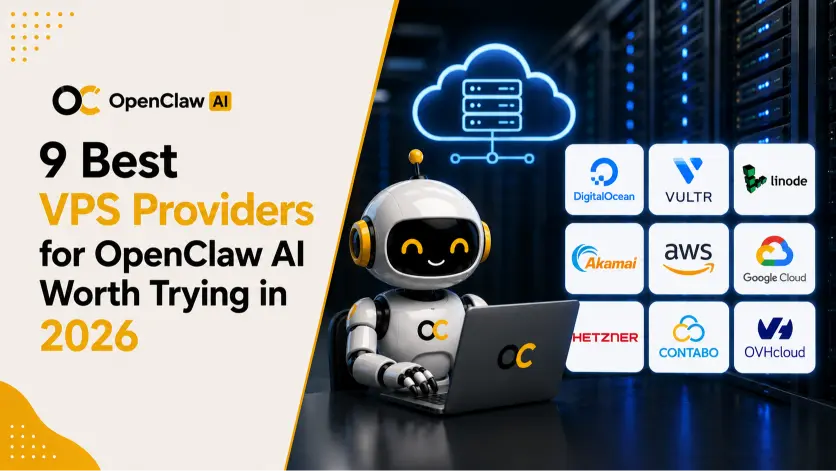
Whichever model ends up powering your agent, OpenClaw itself still needs somewhere reliable to run.
And if you want it available around the clock rather than only while your own machine happens to be on.
Truehost’s OpenClaw hosting gives you a dedicated VPS built for exactly that, so the model debate above stays the only decision left to make.
Final Verdict
There is no single winner in the OpenClaw AI vs Gemini comparison, because it was never really one question.
Pick Gemini’s app if Google’s ecosystem already runs your day.
Pick OpenClaw if you want an assistant that works across everything you use, including Gemini itself, as one option among several.
Either way, you now know which of the two questions actually brought you here.
Frequently Asked Questions
Is OpenClaw Cloud the same thing as OpenClaw?
Not exactly. OpenClaw, the project is free and open source. Some third-party sites sell a hosted, managed version under a similar name for a flat monthly fee, which is a legitimate convenience but a different product from running OpenClaw yourself.
Can I use Gemini as the model inside my OpenClaw agent?
Yes. OpenClaw supports any model, including Gemini, and many operators route it through OpenRouter alongside a fallback model for when Gemini hits a rate limit.
Is Gemini still being actively developed in 2026?
Yes, with 2026’s Agent Mode update adding step-by-step task planning on top of its existing search grounding and large context window.