Tools like Cursor and Copilot live inside your editor and wait for you to open a session.
OpenClaw AI works differently.
It runs as a persistent background agent you can message from your phone, and it remembers your project’s architecture across every session instead of starting over each time you return to it.
That shift changes what delegation looks like.
Instead of pairing with the AI line by line, you can hand off a full task, such as generating an endpoint, writing its tests, and committing the change, and then check back once it is done.
Here is exactly how to use Open Claw AI for coding projects.
The main difference comes down to one word: execution. A chat window produces text and waits for you to act on it.
OpenClaw runs as a long-lived process on your machine or server, which means it can plan a task, carry it out over several steps, and report back, closing the loop instead of just describing it.
Step 1: Install and Onboard OpenClaw
Before you install anything, make sure Node.js is set up on your machine, and you have an API key from an AI provider such as Anthropic, OpenAI, or Google.
OpenClaw needs one of these to power its reasoning.
Open your terminal and run the installer for your system:
curl -fsSL https://openclaw.ai/install.sh | bash
Windows users can run the equivalent PowerShell installer instead. Once installed, complete onboarding with:
openclaw onboard –install-daemon
This sets up OpenClaw as a background system agent, registers your API key, and lets you choose your preferred model.
For coding work specifically, pick the strongest available model your budget allows, since code generation and debugging both benefit from stronger reasoning.
Under the hood, OpenClaw runs as a single persistent Node.js process rather than a sprawl of microservices, which keeps the setup straightforward even for developers who have never managed agent infrastructure before.
Step 2: Connect a Messaging Channel
OpenClaw is built to be a persistent agent you can reach from anywhere, not just from your desktop.
Connecting a messaging channel is what makes that possible.
For Telegram, follow the setup wizard and register your bot through Telegram’s BotFather to start sending and receiving prompts.
For WhatsApp, link your device by scanning a QR code directly from your terminal.
Either option lets you check in on a running task, approve a commit, or kick off a new one from your phone.
If you would rather work at your desk, you can skip messaging entirely and use the OpenClaw Gateway Dashboard at http://127.0.0.1:18789/ instead.
Both paths reach the same gateway, so you are never locked into one workflow.
Kick off a long-running refactor from your phone during a commute, then switch to the dashboard once you are back at your desk to review the diff in more detail.
Step 3: Set Up Project Context
This is where OpenClaw genuinely separates itself from session-based tools.
Instead of forgetting your project’s structure the moment you close the window, it keeps a persistent MEMORY.md file that holds onto your architecture decisions.
Navigate to your project folder in the terminal and run openclaw.
Then give the agent your high-level rules in plain language, for example, telling it you are using the repository pattern for an Express.js project.
It stores that context and applies it automatically the next time you return, so you are not re-explaining your codebase every session.
Each agent is defined by its own markdown configuration files, kept as plain text on your machine rather than tucked inside a vendor’s database.
That makes your project’s memory something you can open, read, and edit directly whenever you want to correct or expand it.
Step 4: Define Quality Gates in AGENTS.md
Once the agent understands your architecture, set the rules for how it should verify its own work. An AGENTS.md file is where you define this.
You can instruct OpenClaw to run your test suite automatically after generating code and only stage a commit if every test passes.
This single guardrail prevents a common failure mode with autonomous coding agents, where confident-looking code ships without ever being checked against your existing tests.
Think of AGENTS.md as the operations manual for how your agent behaves, not just what it builds.
Beyond test suites, you can specify branch naming conventions, commit message formats, and which files or directories are strictly off-limits, so the agent operates inside boundaries you set once and never have to repeat.
Step 5: Delegate Genuine Coding Tasks
With context and quality gates in place, you can start handing off genuine work through your linked Messenger or the dashboard.
A well-formed request reads like an instruction to a capable teammate, not a search query.
Consider generating the API endpoints for user authentication, writing the unit tests, and committing the changes.
OpenClaw plans the steps, writes the code, runs the tests you defined, and commits only once everything checks out, all without you touching your editor.
For anything sensitive, keep a human approval step in the loop.
Reviewing a diff before it merges takes far less time than untangling a mistake that already reached production.
Multi-step requests are where this setup pays off the most.
Rather than breaking a task into ten separate prompts, you can describe an entire workflow, such as scaffolding a new feature, wiring it into your existing routes, writing coverage for it, and opening a pull request, and let the agent work through each step in order.
Step 6: Add Coding-Specific Skills
OpenClaw’s base install handles the fundamentals, but skills from ClawHub extend it into a genuinely capable coding partner. A few worth installing early:
The code review skill summarizes a diff or pull request with actionable feedback, catching style inconsistencies and missing error handling before a human reviewer even opens the file.
A deploy checker skill can monitor your CI pipeline and flag a failed build with a plain-language explanation of the likely cause.
If you rely on external services such as Stripe, Notion, or Linear, an MCP connector skill can plug your agent into those platforms directly through a standardized protocol, instead of you writing custom integration code for each one.
A skill that pulls live documentation is worth adding early, too.
When your agent hits an unfamiliar API or a library update, it can look up the current documentation and cross-check its own code against it, instead of relying on stale training knowledge that might already be out of date.
A Note on Security for Coding Agents
An agent with shell access, file permissions, and git credentials is powerful, and that combination deserves caution.
Running OpenClaw inside an isolated VM or a dedicated server rather than your main laptop limits the damage if a skill or a prompt injection ever goes wrong.
Treat every third-party skill the way you would treat an unfamiliar dependency in your package manager.
Read through what it does before installing it, check that the publisher has a genuine history, and favor skills with an active update record over ones that have sat untouched for months.
Community skill registries have already seen coordinated attacks that planted malicious packages under names designed to look legitimate.
Before installing anything you did not write yourself, confirm it has passed a security scan and matches its stated purpose, since a compromised skill inherits whatever permissions your agent already has.
Final Thoughts
Used this way, OpenClaw stops feeling like an autocomplete tool and starts feeling like a teammate who can carry a task from request to commit.
The setup takes a bit of upfront work, mainly around context files and quality gates, but that investment is what makes delegation safe enough to rely on.
Start with one small, well-defined task rather than handing over your entire backlog on day one.
Watch how the agent plans, executes, and reports back, then expand what you delegate once you trust the pattern it settles into.
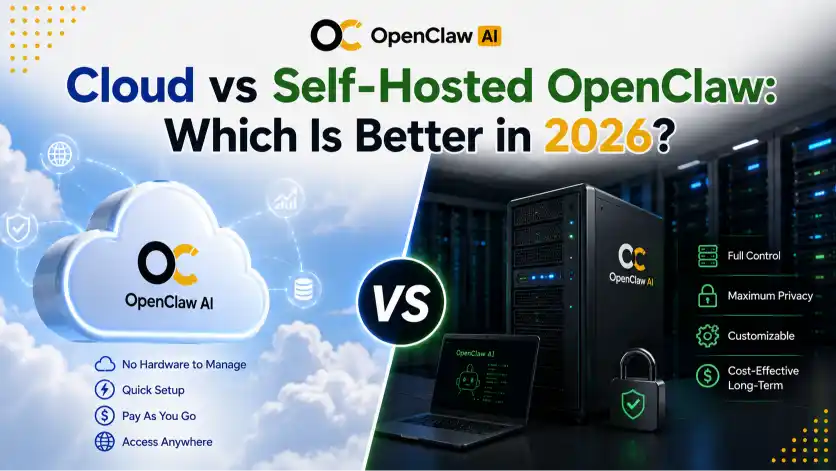
If you plan to run OpenClaw around the clock instead of only when your laptop is open, the server behind it deserves the same care as your project setup.
A dependable, affordable VPS keeps your coding agent online and isolated from your personal machine, and it is worth comparing plans before your first coding project.