You have probably watched a few videos about OpenClaw by now. Someone’s agent even negotiated a car price on its own.
Someone else set it up on an old Mac Mini and forgot about it. You came here for something simpler than all of that.
You want to know the answer to the question: how does OpenClaw AI work?
This article answers exactly that one question for you. It skips the installation steps and the feature list.
It walks through what actually happens between the moment you send a message and the moment OpenClaw replies.
By the end, you will be able to picture the whole path a message takes. You will also see why people describe OpenClaw as an agent rather than a chatbot.
That difference comes down to how it makes decisions, not how it looks on the screen.
What OpenClaw Actually Is
OpenClaw is a program that runs on your own computer. It does not live on a distant server owned by a large company.
You talk to it through apps you already use, like WhatsApp, Telegram, or Discord.
That single detail changes everything about how it behaves. Your conversations, your files, and your history stay on your machine.
The company behind OpenClaw never sees any of it.
In terms of category, OpenClaw counts as an autonomous AI agent, not a chatbot or a browser plugin.
This distinction is worth knowing because an agent can take multiple steps toward a goal on its own, while a chatbot only ever answers the single message in front of it.
Most chatbots wait for a question and answer it once. OpenClaw behaves more like a quiet assistant sitting at your desk.
It can act on its own between messages, follow up later, and keep working on a task after you close the app.
What makes it stand out from other agent tools is the combination of three things at once:
- It runs locally
- It works across the messaging apps you already have open
- It keeps checking in on its own through the heartbeat.
Few beginner-friendly agents put all three pieces together in one package.
OpenClaw Versus Manus
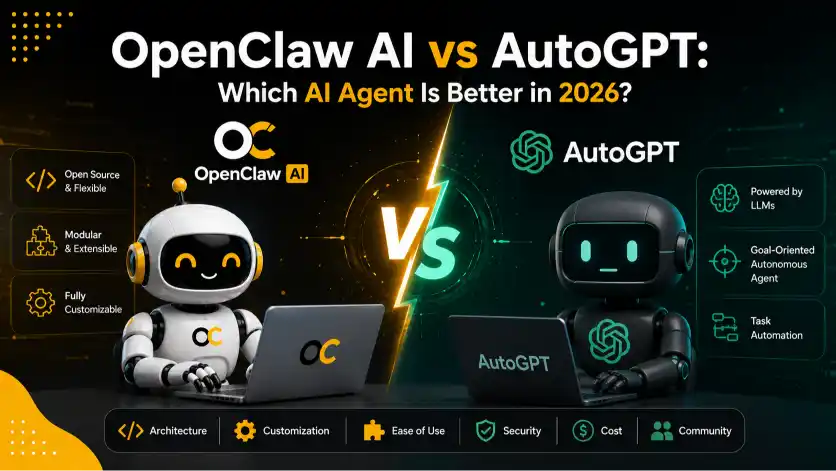
Manus is another well-known AI agent, so beginners often ask how the two compare.
Manus runs its tasks on remote servers and hands you the results through a web dashboard.
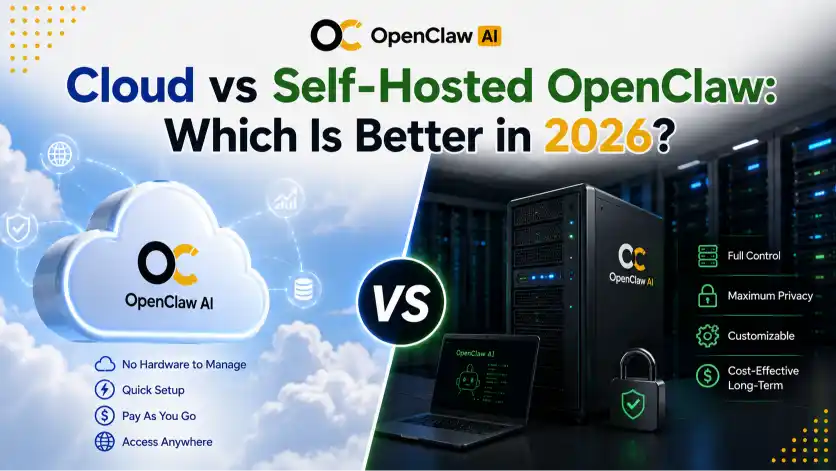
OpenClaw instead runs on hardware you own and reaches you through apps you already have installed.
Neither approach is better in every case. Manus can suit someone who wants a browser-based tool with nothing to install.
OpenClaw suits someone who wants their data to stay local and their assistant reachable from WhatsApp or Telegram.
The Journey of a Single Message
Picture yourself typing a message into WhatsApp. That message does not go straight to an AI model.
It first lands inside OpenClaw’s own message router, running quietly in the background.
The router checks which conversation the message belongs to.
It pulls up the notes from your earlier chats on that same topic. It then hands everything, your new message plus the old context, to the AI model.
The model reads all of it and decides what to do next. Sometimes it just writes back with an answer.
Other times, it decides a tool is needed, like searching the web or checking a calendar.
If a tool is needed, OpenClaw runs it and waits for the result. It feeds that result back to the model.
The model then writes a final reply and sends it to you through the same app you started in.
Say you ask it to find a flight and add the date to your calendar. The model first calls a search tool to check flight prices.
It then calls a calendar tool to add the date, and only after both steps finish does it reply to confirm the booking is noted.
This back and forth between the model and its tools can happen several times before you see a single reply.
You only ever see that one final message. Everything before that stays hidden, which is exactly why the process can feel like magic until you see it broken down.
How It Talks Through Your Apps
OpenClaw treats WhatsApp, Telegram, and Discord as different doors into the same house. Each app is called a channel inside the system.
The core process behind all of them stays identical, whichever door you walk through.
This is why someone using Telegram and someone using WhatsApp both get the same quality of reply.
The channel only changes how the message arrives and how the reply gets delivered, everything in between works the same way for everyone.
You can even run more than one channel at once. Many beginners message OpenClaw from WhatsApp during the day and from Discord in the evening.
The agent recognizes you as the same person across both because the memory sits underneath the channels, not inside them.
How It Remembers Things
A lot of beginners assume the memory lives in some private cloud database. It does not work that way at all.
OpenClaw saves what it learns as ordinary text files, sitting right there on your own computer.
These files hold notes about your preferences, your ongoing projects, and past conversations.
The AI model reads them again each time you write in.
This is also why moving OpenClaw to a new machine means moving those files along with it.
You can open these files yourself in a plain text editor. Nothing about the memory is locked away in a format only the company can read.
That openness is one of the reasons beginners feel comfortable trusting it with real tasks.
What Happens When You’re Not Even Talking to It
OpenClaw does not just sit idle between your messages. It checks in on a set schedule, often called a heartbeat.
During each check, it looks at pending tasks and decides if anything needs attention.
This is how it can remind you about something without being asked in the moment. You set the intention once, in an earlier conversation.
The heartbeat carries that intention forward on its own.
Think of it as a personal assistant glancing at their notepad every few minutes. Most of the time, there is nothing new to report.
Every so often, something on the list is due, and that is when you get a message you did not directly ask for.
Common Misconceptions, Cleared Up
Beginners carry a few assumptions into their first week with OpenClaw.
Clearing these up early saves a lot of confusion later, especially around what the agent can and cannot do on its own.
One question comes up more than any other: Is OpenClaw legit?
The honest answer sits in everything covered above.
Its code runs openly on your own machine, its memory sits in files you can open yourself, and nothing about it depends on hidden servers you cannot inspect.
- It is not a fully autonomous being with its own goals. It only acts on tasks you or your earlier instructions set up for it.
- It does not run in the cloud by default. Most setups run locally, which is why people install it on spare laptops or a Mac Mini.
- Giving it more access, like your email or calendar, means giving it more responsibility. Start small and expand only once you trust how it behaves.
- A longer conversation does not make it smarter. It only means there is more context saved for the model to read back later.
How the Model Decides What to Do
The model behind OpenClaw does not follow a fixed script.
It reads your message alongside the list of tools it has available, like search, calendar, or file access. It then reasons through which combination actually answers what you asked.
This reasoning step is what separates an agent from a simple chatbot. A chatbot only ever produces a block of text.
An agent looks at the situation, picks an action, checks the result, and decides again whether more action is needed before it replies to you.
That loop can repeat several times in a row for a complex request.
For a simple one, like asking for the time in another city, it often skips straight to a reply with no tool calls at all. The system scales its own effort to match the size of the task.
What This Means for a Beginner Trying It
Once you see the full loop, message in, context pulled, model reasons, tool runs if needed, reply goes out, the rest of OpenClaw starts to make sense.
The setup steps stop feeling random once you see this. Each one exists to support this same loop.
You do not need to memorize any of the technical terms to use OpenClaw well. You need to trust that a clear loop runs behind every reply you get.
That confidence is what turns a curious beginner into a comfortable daily user.
Try starting with one small task, like asking it to summarize an article and save the summary as a note.
Watch how it responds and how it saves that note for later. Small tests like this teach you far more than reading a full feature list ever will.
Why the Local Setup Changes the Experience
Running on your own machine instead of a shared cloud server brings a different kind of speed and privacy.
There is no queue of other users competing for the same server resources. Your replies depend only on your own computer’s performance.
This setup also means OpenClaw can reach files and programs already sitting on your desktop.
It can open a document you saved yesterday or check a folder you organized last week. A cloud-only assistant cannot do that, since it never has direct access to your machine.
The tradeoff is that OpenClaw only runs when your computer is on and connected. Close the laptop, and the heartbeat pauses along with everything else.
Many beginners solve this by dedicating a low-cost spare machine to run it around the clock.
You do not need powerful hardware to get started.
A modest spare laptop or a low-cost Mac Mini handles it well, since the heavy reasoning work happens on the AI model’s side, not on your device.
Your machine mainly needs to stay on and stay connected.
Where to Go From Here
This explanation covered the mechanics behind OpenClaw, not every feature it offers.
If you want the fuller picture, including installation and pricing, our Complete Guide to OpenClaw AI walks through all of it in one place.
Come back to this article any time the process feels confusing again. A clear picture of the loop behind OpenClaw makes every other guide about it easier to follow.